
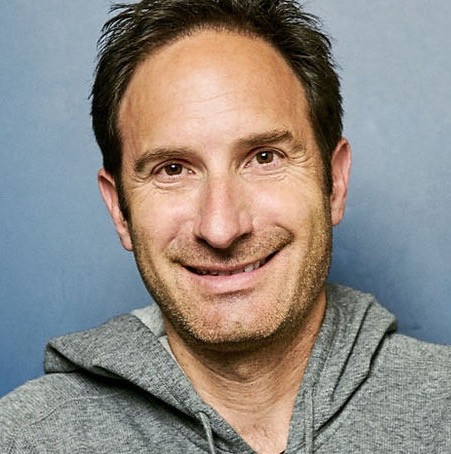
8 June 2026 · Rafe Furst · Co-Founder · The Crypto Company
Solving the Prisoner's Dilemma of Money
I have spent the better part of three decades thinking about one question: what happens when you design a system where the selfish move is also the best move for everyone?
It started at the poker table. In poker, there is a concept called Game Theory Optimal play. GTO is the strategy that cannot be exploited. It does not depend on reading your opponent or getting lucky. It is the mathematically correct way to play, and over time it dominates every other approach. The key insight is that GTO is not about outsmarting anyone. It is about building a strategy so sound that it does not matter what anyone else does.
Now, poker is a zero-sum game. One player's gain is always another's loss. But the insight behind GTO is not limited to competition. The deeper idea is this: when the optimal individual strategy also produces the best collective outcome, you do not need anyone to cooperate on purpose. Cooperation emerges without anyone intending it.
That idea stayed with me as I moved from poker into investing, then into crowdfunding, then into the earliest days of cryptocurrency. The pattern kept showing up. The most durable systems are the ones where you do not need trust, enforcement, or coordination from above. You just need the incentives pointed the right way, and the network builds itself.
Bitcoin: the first proof
There is a famous problem in economics and political science called the Prisoner's Dilemma. Imagine two people who would both be better off if they cooperated. But each one, acting rationally in their own self-interest, has an incentive to defect. The result is that both defect, and both end up worse off than if they had cooperated. It is the foundational tragedy behind most human coordination failures. Why countries cannot agree on climate policy. Why teams of talented individuals still underperform. Why public goods are chronically underfunded.
For centuries, the best anyone could do was design institutions to punish defection: governments, courts, regulators, central banks. All of them exist because the Prisoner's Dilemma has no natural solution when rational actors pursue their own interest.
When I first encountered the Bitcoin whitepaper, I recognized something I had been circling for years. Satoshi had constructed the first system in history where the Prisoner's Dilemma was not just managed or mitigated, but inverted.
In Bitcoin, the selfish move (compete to mine it, then hoard it) is the collaborative move. Every miner competing for the block reward is simultaneously making the network more secure; the more people hoard it, the scarcer and more valuable everyone's holdings become. The protocol aligns individual incentives with collective benefit so completely that the system does not need a government, a court, or a central bank to enforce good behavior. The math does it. The game theory does it. This is not abstract. It is the same logic that drives every successful ecosystem in nature: organisms that find ways to align individual survival with collective benefit dominate. Bitcoin encoded that logic into software.
That is why Bitcoin was inevitable once the whitepaper was published. Not because of ideology. Not because enough people believed in it. Because a system where individual rationality produces collective goodness does not need permission to grow. It is an attractor in the mathematical sense, a natural destination that rational actors converge on because it is the best of all the alternatives.
The promise was betrayed
Bitcoin solved the dilemma for storing value. But what happened next was not what any of us expected.
As crypto grew beyond Bitcoin, the industry rebuilt the exact structures it was supposed to replace. Networks designed their economics so that automated bots could steal from traders before their transactions settled, so that the price feeds everyone depended on could be manipulated, and so that the bridges moving money between chains could be exploited. Billions have been stolen through these weaknesses. Venture capitalists extracted value through insider token allocations that dumped on retail investors. Exchanges front-ran their own customers.
The ethos of cooperation and aligned incentives gave way to a gold rush. Silicon Valley showed up. Wall Street showed up. And they brought their playbook: capture the value, externalize the costs, and move on to the next thing. The Prisoner's Dilemma reasserted itself across the crypto landscape with a vengeance.
Every blockchain became its own island, and every island's economy depended on keeping things fragmented. The people who secured these networks profited from the inefficiency. The bridges between islands were rickety things cobbled together after the fact, and billions have been stolen from them. Not millions. Billions.
The industry that promised to move us from scarcity and extraction to abundance and cooperation had, in the span of a decade, recapitulated the very dynamics it was built to transcend.
What survives
Bad actors can hijack a movement, but they cannot change the forces underneath it. We have seen this before. The early web was open and egalitarian. Then Google, Facebook, and Amazon turned it into a handful of walled gardens. But the underlying protocols never changed. They were still open. They were still sound. And now, a new generation of technology is being built on those same foundations, reclaiming the original promise.
Crypto is that technology. Crypto's extractive era of 2013 to 2025 was a detour, not a destination. Bitcoin's game theory has not changed. The Prisoner's Dilemma inversion that Satoshi constructed is as sound today as it was in 2009. And now, the broader ecosystem is starting to realign with first principles.
Michael Saylor and Jeff Booth, in their respective Bitcoin 2026 keynotes, make the case from different angles. Saylor describes Bitcoin not as digital gold but as a foundational protocol, the base layer of a new financial system where the incentives reward participation and long-term building. Booth argues that deflation is the natural state of a free market, that the entire fiat monetary system exists to prevent it, and that Bitcoin is the first technology that imposes a true free market on money. The implication from both: we are not in a speculative bubble. We are in a paradigm shift that most people cannot see because they are measuring it with the wrong ruler.
These are not fringe voices anymore. They are describing something that runs deeper than ideology or market cycles. Most people have been trained to distrust this kind of claim. A lifetime of extractive systems teaches you that cooperation is either naive or a scam. That skepticism is earned. Every promise of a "new paradigm" in finance has been followed by someone extracting value from the people who believed it.
But Bitcoin did not ask anyone to be less skeptical. It did not ask anyone to trust a new institution or believe a new promise. As Buckminster Fuller once put it, you never change things by fighting the existing reality; to change something, you build a new model that makes the existing model obsolete. That is what Bitcoin did. It made skepticism irrelevant by building cooperation into the machinery itself. You do not have to believe in Bitcoin for it to work. You just have to use it. The incentives do the rest.
That is why cooperation keeps winning, even when people fear it. Not because it asks for faith, but because systems designed this way outperform the ones that are not. It spreads the way any survival advantage spreads: because the organisms that adopt it outlast the ones that do not.
Frame: finishing what Satoshi started
Bitcoin solved the Prisoner's Dilemma for value storage. But in doing so, it made the next dilemma more acute. The better Bitcoin works as a store of value, the more wealth gets locked inside it. And the only ways to move that wealth out still run through the same extractive infrastructure Bitcoin was designed to replace.
The infrastructure for moving, trading, and deploying value across chains remains trapped in the classical version of the dilemma. Every network profits from extracting value from its participants. Every network is incentivized to capture liquidity rather than enable free movement. No network can fix this from the inside, because fixing it means destroying the economics their own stakeholders depend on.
This is the opening. If people always move to the place where they come out ahead, then a system that eliminates extraction at its foundation does not merely compete with existing infrastructure. It becomes the inevitable destination for deployed value. The same dynamic that drove stored value into Bitcoin drives active value toward wherever the economics are aligned with the people using it.
Frame is built from the ground up to be that place. A new blockchain designed to connect every other blockchain into one economy. Not by replacing existing networks, but by making them all work together.
In my book The Future of Venture Capital, I wrote about the four sources of value that underpin any currency: production value, scarcity, network value, and utility. Bitcoin excels at the first three. But utility, the ability to actually use the currency for commerce and exchange across the full breadth of the economy, has been the missing piece. Not because Bitcoin failed, but because the infrastructure connecting Bitcoin's world to the rest of crypto and to the real economy has been extractive, fragmented, and unreliable. That is what Frame is designed to solve.
When our team at The Crypto Company encountered the project that would become Frame, we recognized the pattern immediately. The game theory was sound. The architecture matched the thesis. And because The Crypto Company is publicly traded, we could fund and launch Frame the way Bitcoin launched: fairly. No VC dump cycles. No pre-mine extraction. No raising hundreds of millions to start at a billion-dollar valuation and hoping it holds before insiders cash out.
Frame is designed to start small and grows by earning its way up. A publicly traded company backing an open network is the structural alignment that makes a fair launch possible, and in crypto, fair launches are vanishingly rare. Bitcoin was one. Frame is designed to be another. Sean Docherty, Frame's creator, tells the story of what that commitment actually looks like in practice: The Price of a Fair Launch.
Frame grows by making other networks better. They do not even have to participate or know about Frame. We connect them ourselves. Users benefit the moment they want to move between networks. And that is the same inversion at work: the selfish move for every participant is also the best move for the whole system.
We've been here before
We have all witnessed the moment when a technology crosses from interesting to inevitable. The first time I clicked a hyperlink in a web browser, I did not need anyone to explain what was about to happen. I could feel the entire economy reorganizing itself around what I had just seen. It was not a prediction. It was recognition. The underlying dynamics were so sound that the only question was how long it would take for everyone else to see what I was seeing.
Bitcoin had that same quality. A whitepaper from an anonymous author describing a system that no one asked for, solving a problem most people did not know they had. And yet the moment someone truly understood it, they could not unsee the future. A multi-trillion-dollar network with no CEO, no board, and no headquarters. Built entirely on the principle that individual rationality, properly channeled, produces collective goodness.
The pattern is always the same. A technology emerges that aligns individual incentives with collective benefit. It looks speculative or academic or too early. Then the deeper logic takes hold and everything else follows. The question was never whether the technology would win. It was how long it would take for the rest of us to catch up.
Frame is designed to finish what Bitcoin started, by extending the same principle from storing value to moving it: making cooperation the individually optimal strategy.
The next chapter
We are building something that holds together because the incentives point the same way. Not because anyone is in charge. Not because we asked permission. Because it works for everyone who participates, and that is the oldest survival strategy there is.
Satoshi freed us from extractive money with Bitcoin. What followed was a thousand new blockchains, each one competing for your money and extracting value along the way. Frame is here to finish what Satoshi started.
Bitcoin was the proof of concept. Frame is the next chapter.
Read more about Frame's approach to decentralization and validators on the Frame Community Blog. Join the conversation on Discord or Telegram. And if you want to be contacted about how you can get involved with our launch, let us know here.
Forward-looking statements: This post contains forward-looking statements regarding the design, planned features, and intended development of Frame Network and its validator model. These statements reflect current expectations and beliefs about future events and are subject to risks and uncertainties that could cause actual outcomes to differ materially. Features and capabilities described as being designed, planned, or called for by the roadmap are not currently available and may change or may not be released. Nothing in this post is an offer to sell or a solicitation to buy any security or token, or a commitment as to timing, returns, or specific outcomes. Frame Network is affiliated with The Crypto Company (OTC: CRCW), a publicly traded company. Readers should not place undue reliance on forward-looking statements, which speak only as of the date published.
More to read
Other posts from the team.

Team update
Worth waiting for.
Why we are taking the time to build Frame the right way.
Team update
Decentralization, on purpose.
What the validator set means, and why progressive decentralization is the right path.

Founder blog · Sean Docherty
The Price of a Fair Launch.
Why building Frame the right way costs more upfront, and why it has to.