

8 June 2026 · Sean Docherty · Founder of Frame
The Price of a Fair Launch
A year of refusing easy money, what a fair launch actually costs, and why a public company turned out to be the only structure that could fund Frame without poisoning it.
“Fair launch” is one of those phrases that gets thrown around until it barely means anything.
So before I tell you this story, let me say plainly what I mean by it, because everything else rests on it.
A fair launch means nobody starts ahead of you. No insiders sitting on cheap tokens from a private round. No fund waiting to dump its allocation the second there's enough liquidity to sell into. No pre-mine, no hidden treasury, no quiet head start for the people closest to the project. Everybody walks up to the same starting line, and the network has to earn its way up from there instead of being inflated to a billion-dollar valuation on day one and hoping the number holds.
It's one of the rarest things in this whole industry. Bitcoin was a fair launch. I don't know of any since then. After the year I've just had, I can tell you exactly why so few projects manage it: a fair launch is expensive. Not in the way you'd guess. It costs you the easy money, the fast headlines, and a frankly unreasonable amount of sleep. This is the story of what it cost us, and the decision that finally let us protect it.
What we built, and the line we drew
We didn't begin as some grand thesis but overtime grew into a decentralized exchange. It was typically supported by 50+ full-time developers at any given time because a handful of people cared more than the situation really called for. The moment we started trying to unify liquidity across chains, we kept hitting the same wall: this industry is built to reward mercenary capital. Money that shows up to farm a new network for yield, dumps it, and leaves the real community holding a ghost chain.
We made a call early on that ended up shaping everything. A few months in, it hit us that we were just inheriting everyone else's problems by utilizing existing codebases as a foundation. So, we threw the work away and started over, building a chain from the ground up from the very first line of code. Which enabled us to utilize Quantum-resistant signatures. Sharded validator keys, so no single party can move funds on its own across networks. An architecture meant to connect networks instead of walling them off.
That came from the same place as the fair launch, really. Do it right or don't bother. If we were going to ask people to trust this network, we weren't about to hand insiders the advantage before the doors had even opened.
The year nobody saw
Drawing the line is the easy part. Holding it is what costs you.
Through 2025 I took meeting after meeting with people from across the venture world, listening to offers that sounded like salvation and read like a death sentence. Millions in funding, sure, in exchange for terms designed to gut the project before it ever got off the ground. Governance grabs dressed up as "advisory" seats that would eventually take over majority voting power. Demands that we lock our treasury inside someone else's platform. And the one we heard most: investors who didn't care about the technology at all and just wanted a marketing window, so they could offload discounted tokens onto the community the minute the news broke.
We turned down every single one.
That had a price, and I won't pretend otherwise. Staying unfunded meant we couldn't buy hype or pay for the listings that make a project look bigger than it is. It meant staying quiet while the market screamed for news. It meant building slowly off our own funds and our own merits, and at one point resetting the liquidity just to clear out the bots and vultures circling the transition. From the outside, it looked like silence. From the inside, it was a year in the trenches, defending the launch from the very people who say they're here to support this space.
I'd make all of those choices again. But somewhere in the middle of that year, I hit a problem I couldn't just walk away from.
The paradox
Here's the trap that catches almost every honest founder.
A fair launch still needs money. You can't build a network on principle alone. It takes engineers, infrastructure, security, runway, and enough institutional weight to stand next to the giants. The problem was that every door I knocked on wanted the one thing in return that would kill any idea of a fair launch. The capital always came attached to insider allocations, dump cycles, control. To get what I needed to ensure a fair system for all, I was being asked to issue tokens and give them to VC which would make it unfair.
You don't fix that by negotiating harder. It's structural. The standard venture model and a real fair launch just don't fit together, no matter how the term sheet is worded. So I had a choice. Keep saying no and stay small forever, or find a completely different strategy and structure to fund raising. One whose structure made extraction unnecessary in the first place.
The answer was a publicly traded company
The answer, once it came into focus, was a publicly traded company.
Think about why the VC model produces dump cycles at all. Insiders buy tokens cheaply in private, the public buys them at premium, and the gap between the two is the profit. The whole machine runs on that asymmetry. A publicly traded company simply doesn't need it. Its value lives in growth of the business, under public reporting and public scrutiny. It can fund the building of a network without a discounted insider allocation to unload on retail, because its upside sits somewhere else entirely, somewhere everyone can see.
There's a second reason I've come to value just as much, and it's permanence. We've all watched what happens to networks that run on one founder's energy. Founders burn out. They move on. Sometimes a founder just steps back for a while, and a chain millions of people were relying on is suddenly left without anyone clearly steering it. I don't blame them for it. It's a fragility baked into anything that lives or dies by the people who started it. A company is a different kind of thing. It's built to outlast any one person. Its commitment to the network doesn't hinge on whether someone's enthusiasm holds out, and its incentives stay locked onto the network's success because its own value depends on it. Twenty years from now, when the current founders, me included, aren't the ones doing the work anymore, that company will still be here running on this chain and building on it. Because that's what it's built to do.
That's the alignment I'd been chasing the entire time. A public company standing behind an open network is one of the only setups that can fund a fair launch without quietly poisoning it, and one of the only ones that can still be there decades down the line. Rafe Furst lands on the same conclusion from first principles in his founder blog, and the fact that the two of us got there from opposite directions, him through game theory and me through a year of saying no to the traditional model, is a big part of why I trust this model.
Why The Crypto Company
Which brings me to why I'm genuinely excited about this, and not just relieved.
You already know Frame is being built by The Crypto Company (OTCID: CRCW), a publicly traded company that has turned its entire vision toward this network. What I haven't really talked about is why it's the partner I chose, and why I think it's the right home for everything we set out to protect. This was never a logo on a sponsor page. TCC is the engine Frame needs to run at full speed, and the structure that lets us keep the launch fair. As the founder of Frame, I've got my hands on the wheel as this scales, right alongside the people who fought for this network through the quiet year.
What each side brings is really the whole point. We bring a chain built properly from zero, a community that held on through the silence, and a refusal to compromise that's already been stress-tested for a year. TCC brings public-market accountability, real institutional resources, and a structure that makes a fair launch possible instead of impossible. Frame grows by making other networks work better together, not by squeezing the people who use it, and now it finally has the operational backing to do that at the scale the idea always deserved.
The next chapter
The price of a fair launch, it turns out, was a year of turning down easy money, building in silence, and waiting for the right structure to exist instead of forcing the wrong one. Worth every cent we didn't take.
Bitcoin proved a network can be born fair and still grow, because the incentives point the same way for everyone in it. Frame takes that idea and extends it to moving value across every chain, and now it has a home that can fund it without betraying it.
If you want to understand the machine itself, read how our validators secure the network on the Frame Community Blog. If you want the deeper thesis behind why any of this works, read Rafe's piece on the Prisoner's Dilemma. And if you want to get in on the discussion on what comes next, come find us on Discord and Telegram.
We started from zero on purpose. We stayed independent on purpose. And we chose this home on purpose. The foundation is set. Now let's see what it was all for.
Forward-looking statements: This post contains forward-looking statements regarding the design, planned features, funding, and intended development of Frame and its ecosystem. These statements reflect current expectations and are subject to risks and uncertainties that could cause actual outcomes to differ materially. Features, structures, and plans described here may change or may not be realized. Nothing in this post is an offer to sell or a solicitation to buy any security or token, or a commitment as to timing, returns, or specific outcomes. Frame is affiliated with The Crypto Company (OTCID: CRCW), a publicly traded company. Readers should not place undue reliance on forward-looking statements, which speak only as of the date published.
More to read
Other posts from the team.

Team update
Worth waiting for.
Why we are taking the time to build Frame the right way.
Team update
Decentralization, on purpose.
What the validator set means, and why progressive decentralization is the right path.
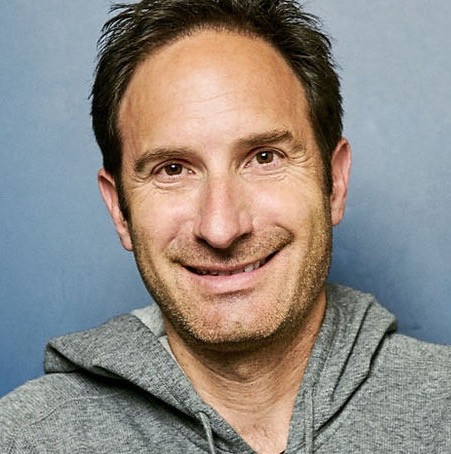
Founder blog · Rafe Furst
Solving the Prisoner's Dilemma of Money.
From poker to Bitcoin to Frame: what happens when self-interest and collective good align.